Drug Safety Settlement

  • Most Popular
  • Most Shared

REUTERS SHOWCASE

Bernanke Testimony

Bernanke Testimony

Bernanke says more progress needed before stimulus pullback.  Full Article 

Sensex Falls

Sensex Falls

Sensex falls for third day; L&T results spark worries.  Full Article 

Copper Shortage

Copper Shortage

Copper smelter closures put cable makers in tight spot.  Full Article 

Tax Avoidance

Tax Avoidance

Factbox: Apple, Amazon, Google and tax avoidance schemes.  Full Article 

Tracking India Gold

Tracking India Gold

Physical gold market awaits fresh import guidelines.  Full Article 

Earnings Season

Earnings Season

L&T looks overseas to offset weak home market  Full Article | Full Coverage 

Bank Acquisition

Bank Acquisition

Srei Infrastructure to buy Austrian bank unit - paper  Full Article 

Just Dial IPO

Just Dial IPO

Just Dial's 9.4 billion rupee IPO covered 11.6 times  Full Article 

Buy, Sell or Hold?

Buy, Sell or Hold?

Confused while buying stocks? Get buy, sell or hold recommendations from VantageTrade.  Full Coverage 

Reuters India Mobile

Reuters India Mobile

Get the latest news on the go. Visit Reuters India on your mobile device.  Full Coverage 

Inflation China's key long-term risk - c.bank chief

Related Topics

Track BSE Sectoral Indices

Track Markets: BSE Sectoral Indices

Track and analyse performance of all BSE sectoral indices and other global indices on a single page.   Full Coverage 

China's Central Bank Governor Zhou Xiaochuan (L) and Chairman of China Banking Regulatory Commission Shang Fulin attend a news conference held on the sidelines of the18th National Congress of the Communist Party of China (CPC), in Beijing November 11, 2012. REUTERS/Jason Lee

China's Central Bank Governor Zhou Xiaochuan (L) and Chairman of China Banking Regulatory Commission Shang Fulin attend a news conference held on the sidelines of the18th National Congress of the Communist Party of China (CPC), in Beijing November 11, 2012.

Credit: Reuters/Jason Lee

BEIJING | Sat Nov 17, 2012 2:47pm IST

BEIJING (Reuters) - Inflation is the main long-term risk for China as the economy makes a transition from a planned economy to a market-based one and deeper financial reforms are needed to complete the move, central bank governor Zhou Xiaochuan said on Saturday.

"There is a general tendency for overheating impulses during China's economic transition process and we should always stress the need to control inflation," Zhou told a financial forum.

"In most occasions, pressures from various sides is to loosen monetary policy to spur growth, but there is less push for preventing economic overheating and inflation," he said.

A main feature of China's economic transition is that many entities, including local governments, are not subject to "soft constraints", which means they tend to spend more and fuel economic overheating, Zhou added.

China's annual inflation eased to 1.7 percent in October from 1.9 percent in September after a two-year fight by the central bank to bring it back under the government's 4 percent target after the effects of a 2008-09 economic stimulus programme lifted CPI to a three-year high of 6.5 percent in July 2011.

The policy tightening needed to do so pushed required reserve ratios (RRR) at commercial banks to a record high of 21.5 percent as the central bank strove to lock up excess liquidity that fuelled speculative investments and drove up basic prices.

The downturn encountered by China subsequently, as the European Union's sovereign debt crisis has festered and sapped demand for Chinese exports from its single biggest market, has complicated the policy backdrop.

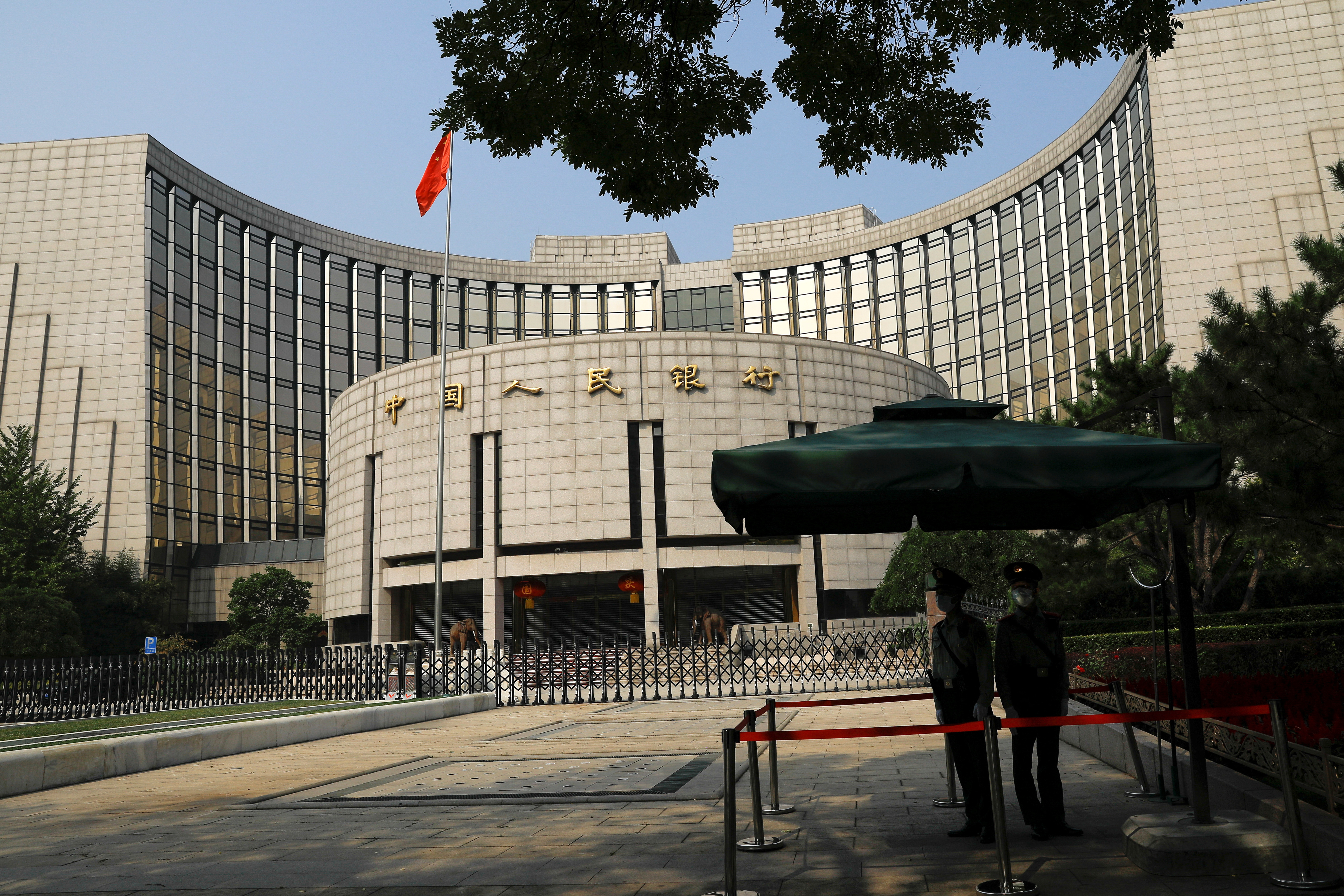
During the current policy cycle, the People's Bank of China (PBOC) cut interest rates in June and July this year and has lowered required reserve ratios (RRR) three times since late 2011 to free an estimated 1.2 trillion yuan for lending as part of a year-long programme of pro-growth policy fine-tuning.

GAINING INFLUENCE

The central bank, though, has cautiously held off on more aggressive easing, opting instead to pump short-term cash into money markets to ease credit strains, a move analysts say reflects Beijing's concerns about reigniting property speculation and inflation risks.

It also liberalised the interest rate environment with its June and July cuts to give commercial banks more room to set both lending and deposit rates competitively.

The PBOC is not independent, unlike the U.S. Federal Reserve or the European Central Bank, as it needs the cabinet's green-light on key decisions on interest rates and currency, but analysts say it has been gaining more influence on policies.

Zhou, who been campaigning for faster interest rate and currency reforms in the past decade, is likely to step down early next year after he was left out of a key policymaking group of the ruling Communist Party.

And Zhou kept up his call for deeper reforms.

"On the one hand, we need to maintain a healthy economy, but we also feel deeply that the People's Bank of China must push forward reforms and opening up," Zhou told a financial forum in Beijing.

"Without reforms and opening up, economic development and financial stability cannot be sustained and monetary policy transmission mechanisms will not be healthy," he said.

Zhou was pivotal in forging a consensus within the party leadership that led to a landmark revaluation of the yuan in 2005 and a decision in June 2010 to end a two-year peg to the dollar introduced to help China weather the global financial crisis.

(Reporting by Nick Edwards and Kevin Yao; Editing by Robert Birsel)

Comments (0)
This discussion is now closed. We welcome comments on our articles for a limited period after their publication.